

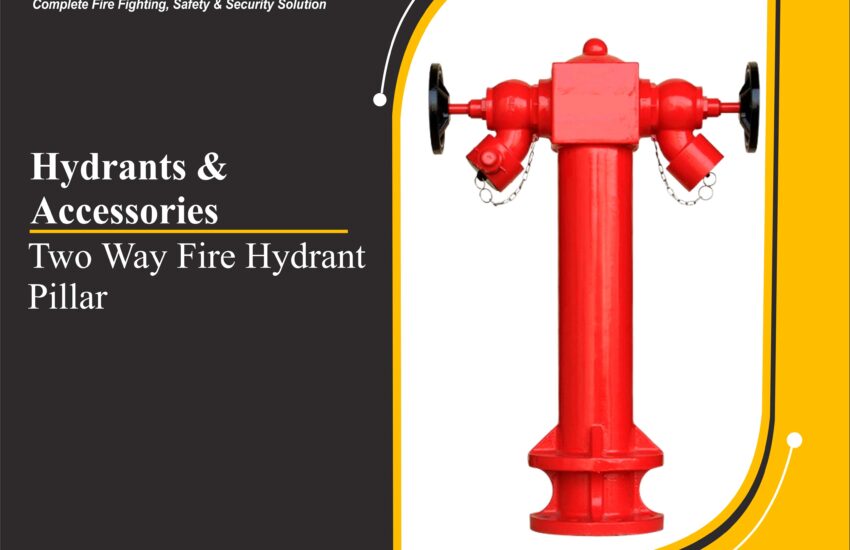
Two Way Fire Hydrant Pillar also known as a Two Pillar Hydrant System, is an essential component of modern firefighting infrastructure. This system provides a reliable water source that assists firefighters in controlling and extinguishing fires effectively. Depending on its installation and structure, a Pillar Landing Fire Hydrant can be classified into two types: landing type and underground type.
Types of Fire Hydrant Systems
- Landing Type Fire Hydrant:
The landing type fire hydrant is installed above ground, making it easily accessible and convenient to operate during fire emergencies. It features an upper part visible above the surface, allowing quick hose connection and water flow regulation. - Underground Type Fire Hydrant:
The underground type fire hydrant is installed below the ground surface. It is designed to blend with the surrounding environment while still providing reliable water supply for firefighting operations. This type is ideal for maintaining the aesthetic harmony of urban areas and ensuring system protection.
Purpose and Uses of Fire Hydrants
The primary purpose of a fire hydrant system is to supply water for fire suppression. However, fire hydrants also serve various secondary purposes, including:
- Line Flushing:
Fire hydrants are often used to flush water distribution lines due to their high flow capacity and easy operation. - System Testing:
Hydrants play a vital role in testing the hydraulic capacity of water distribution networks. - Commercial and Municipal Uses:
Common secondary uses include supplying water for construction sites, street cleaning, sewer maintenance, and road works.
Working Principle of a Fire Hydrant
A fire hydrant system is directly connected to the main water supply line. When a fire occurs, firefighters locate the hydrant, remove the valve cover using a special wrench, and connect the hose to the outlet. Once the valve is opened, pressurized water flows through the hose to extinguish the fire.
Each hydrant includes:
- Connection points for hoses
- Control nuts or bolts for valve operation
- A riser pipe that connects the hydrant to the underground main water line
Although simple in appearance, the internal mechanism of a fire hydrant can vary depending on local standards and environmental conditions.
Types of Fire Hydrants
There are two main types of fire hydrants based on their operation and climate suitability: Wet Barrel Hydrants and Dry Barrel Hydrants.
1. Wet Barrel Hydrant
- Used in regions without freezing temperatures
- Water remains in the hydrant barrel above ground
- Easier to construct, operate, and maintain
- Cost-effective and suitable for moderate climates
2. Dry Barrel Hydrant
- Designed for cold regions where freezing is common
- Water is stored below ground level to prevent freezing
- The valve opens only when needed
- More complex construction and higher maintenance requirements
Difference Between Wet Barrel and Dry Barrel Hydrants
| Feature | Wet Barrel Hydrant | Dry Barrel Hydrant |
|---|---|---|
| Climate Suitability | Warm regions | Cold/freezing regions |
| Water Position | Above ground | Below ground |
| Maintenance | Easy | Comparatively difficult |
| Cost | Lower | Higher |
| Freezing Risk | High | None |
Components of a Fire Hydrant System
A complete fire hydrant system consists of several key components that ensure efficiency, reliability, and quick response during emergencies.
- Firefighting Pumps & Accessories
- Piping and Valves
- Control Panels
- Landing Valves
- Fire Hoses and Couplings
- Hose Reel
- Branch Pipes and Nozzles
- Fire Brigade Connections
- Wiring and Instrumentation
- Maintenance Valves
Each component plays a vital role in maintaining adequate water flow and pressure during firefighting operations.
Technical Specifications of Two Way Fire Hydrant Pillar
- Diameter: 2.5″
- Model: CF2WH
- Inlet Diameter: 4″ Table T BS 10 Flange
- Outlet Diameter: 2 × 2.5″ control valve with female BS
- Test Pressure: 25 Bar
- Working Pressure: 20 Bar (290 psi)
- Adaptor Material: Brass / Gun Metal (LG2)
- Paint Finish: Red & Yellow Epoxy Coated
- Packaging: Standard Packaging
Advantages of Two Pillar Fire Hydrant Systems
- Provides quick and easy water access during fire emergencies
- Durable design with corrosion-resistant coating
- Supports high-pressure water flow
- Compatible with various firefighting hose fittings
- Reliable for both commercial and industrial fire protection applications
Conclusion
The Two Way Fire Hydrant Pillar or Two Pillar Hydrant System is an indispensable part of any modern fire protection network. It ensures immediate access to a steady water source for firefighters, helping to minimize damage and safeguard lives and property. Whether installed above ground (landing type) or below ground (underground type), these systems offer durability, efficiency, and essential protection in all environments.
