

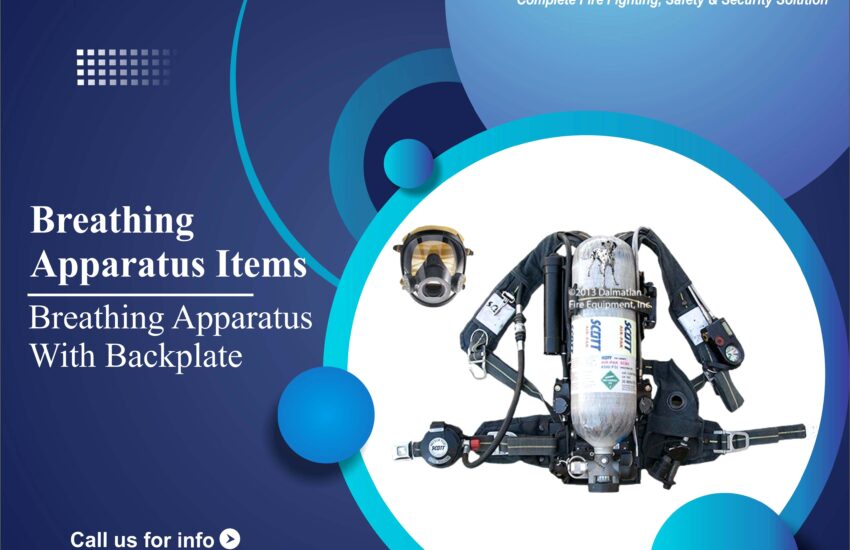
Breathing Apparatus With Backplate is a critical life-saving device used in industrial operations, firefighting, confined-space work, rescue missions, and hazardous environments. Designed to provide clean, breathable air in atmospheres that are oxygen-deficient or contaminated with toxic gases, SCBA ensures maximum respiratory protection for workers and responders.
This article covers SCBA components, features, course training aims, operational procedures, testing requirements, cylinder duration calculations, safety considerations, and knowledge assessment questions, providing a complete SEO-standard resource.
Course Aims – SCBA Training
The primary aims of SCBA training are to provide knowledge, understanding, and operational skills for safe and competent use. This includes:
1. Basic Use and Testing
- Proper operation of self-contained breathing apparatus
- Pre-use and post-use inspection and testing procedures
2. Basic Rescue Techniques
- Single-rescuer emergency techniques
- Team-based coordinated rescue procedures while wearing SCBA
3. Confined Space Awareness
Trainees gain understanding of:
- Confined space entry hazards
- Confined space entry control measures
- Responsibilities of attendants and entrants
- Responsibilities of supervisors
- Key factors in creating confined-space rescue plans
Course Objectives
Upon successful completion of training, participants will be able to:
Operational Skills
- Perform pre and post-usage SCBA inspections
- Confidently wear SCBA during routine and non-routine operations
- Operate safely in conditions such as darkness, height, and confined spaces
Rescue Capabilities
- Perform a basic single-handed rescue of a co-worker
- Work as part of a team to conduct confined-space rescue operations
- Understand confined-space hazards, controls, and rescue planning
Why SCBA Is Essential
SCBA protects workers from major respiratory hazards encountered in industrial and emergency environments.
Types of Respiratory Hazards
- Chemical: toxic gases, vapors
- Physical: dust, particulates
- Biological: pathogens, viruses, airborne infections
How SCBA Prevents Exposure
- Inhalation protection
- Prevention of ingestion
- Protection from eye contact
- Barrier to facial exposure to contaminants
Hazards SCBA Protects Against
- Hydrogen sulphide
- Methane
- Sulphur dioxide
- Carbon dioxide
- Oxygen-deficient or oxygen-enriched atmospheres
Applications :
SCBA with backplate is used in various industrial and emergency settings:
- Gas testing operations
- Confined space rescue
- Firefighting
- Toxic spill containment
- Emergency evacuation
- Hazardous environment entry
- High-risk operational control
SCBA Components
Main Parts
- Face Mask
- Backplate
- Air Cylinder
Backplate Components
- Reducing valve
- Whistle alarm
- Pressure gauge
- Harness system
- Face mask interface
- Lung demand valve
Cylinder Specifications
- Weight: 9 kg
- Working pressure: 300 bar
- Nominal working time: 50 minutes
- Safe escape time: 10 minutes (0–50 bar whistle zone)
- Filling capacity: 9 liters
Face Mask – Open Circuit System
- Exhaled air is released outside the mask
- No recycling or rebreathing of air occurs
Common Face Mask Issues
- Facial hair preventing proper seal
- Corrective eyewear interference
- Anxiety or claustrophobia
- Irregular face shapes
- Limited space use challenges
Key Features of SCBA With Backplate
- Positive-pressure respiratory protection
- Open-circuit air system
- High-efficiency demand valve
- Robust pressure reducer
Using SCBA – Donning Procedures
SCBA Set Donning
- Visually inspect for damage
- Fully extend straps and waist belt
- Lift SCBA onto shoulder
- Position firmly against torso
- Put on face mask neck strap
- Fasten waist belt securely
- Adjust shoulder straps
- Reset lung demand valve
Face Mask Donning
- Place harness over head
- Position mask over face
- Pull lower straps back
- Tighten middle straps
- Secure top strap
- Seal mask completely
SCBA Testing Procedures
High-Pressure Test
- Slowly open cylinder valve to maximum
- Close valve
- Check for leaks
- Pressure must not drop more than 10 bar per minute
Whistle Warning Test
- Whistle must activate at 50 bar ± 5 bar
- Indicates low-air emergency
Face Mask Seal Test
- Breathe normally
- Close cylinder valve
- Continue breathing until whistle activates
- Ensure mask collapses slightly, indicating a tight seal
SCBA Removal After Use
- Release waist belt
- Loosen shoulder straps
- Remove face mask
- Lift SCBA off shoulders
- Store equipment safely
Cylinder Duration Misconceptions – “30-Minute Cylinder”
The “30-minute rating” is based on NIOSH moderate workload testing, not real firefighting conditions.
NIOSH Breathing Rate Example
- 24 breaths/min
- 40 liters/min (moderate workload)
Real Firefighter Consumption
- Often exceeds 60 liters/min or more
- Meaning actual air duration can drop significantly
Example Calculation
Cylinder capacity: 1,270 liters (45 cu ft)
- At 40 lpm: 31 minutes
- At 60 lpm: 21 minutes
Air Consumption Rate (ACR) Calculations
Example Scenario
- Starting pressure: 2,200 psi
- Firefighter A ending pressure: 1,100 psi → ACR = 110 psi/min → Duration = 20 minutes
- Firefighter B ending pressure: 1,300 psi → ACR = 90 psi/min → Duration = 24 minutes
SCBA Types and Uses – Quiz & Answer Key
Sample Questions
(Provided exactly as requested)
- Firefighters suffer from how many thousand smoke inhalation incidents yearly?
- Oxygen-deficient atmosphere is below what percent?
- At what level does the body increase respiratory rate?
- At what level does death occur rapidly?
- SCBA cylinders can contain pressures up to?
- Gauge reading difference allowed?
- Which is NOT an SCBA component?
- Emergency egress cylinders provide air for?
- Airline systems allow operation how far from supply?
- PASS alarm activates after how many seconds of no movement?
- Low pressure alarm activates at what percent?
- Low pressure alarm psi range?
- A 30-minute SCBA cylinder is full at what psi?
- Cylinder must be filled to what percent before emergency use?
- When 90% full, gauge reads?
Answer Key
B, C, D, A, C, D, C, B, A, A, C, D, B, D
