

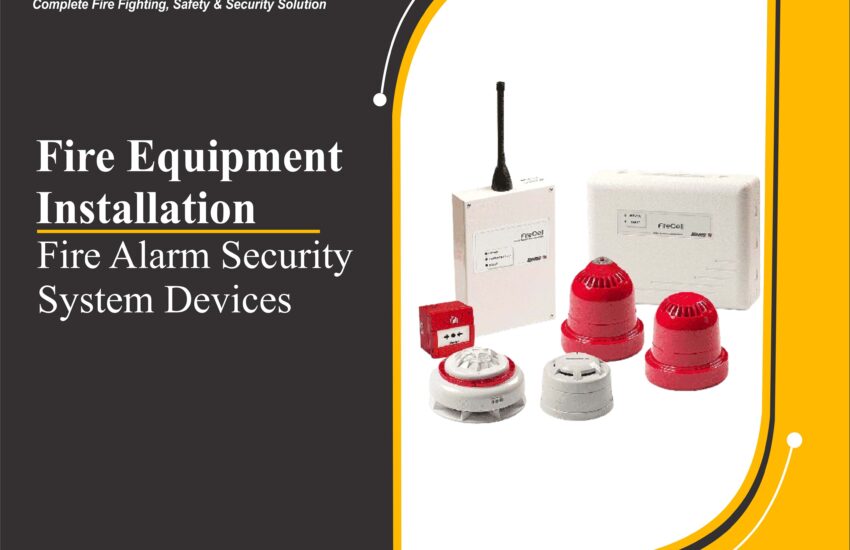
Fire Alarm Security System Devices .Fire safety is a critical part of every building’s design, whether it’s residential, commercial, or industrial. A properly installed fire alarm security system helps detect fire at an early stage, warn occupants, and prevent serious loss or damage.
In this guide, you’ll learn about the main fire alarm system devices—such as the fire alarm control panel, smoke detector, manual call point, sounder, and flasher—their functions, and their specifications.
What Is a Fire Alarm Security System?
A fire alarm security system is a network of connected devices that detect fire, smoke, or heat and alert occupants through sound and visual signals.
It forms the backbone of any fire protection strategy and ensures early detection, quick response, and safe evacuation. Fire alarm systems are mandatory in offices, factories, schools, hospitals, and public buildings to comply with safety regulations.
Main Fire Alarm System Devices
1. Fire Alarm Control Panel
The fire alarm control panel acts as the central unit of the entire system. It monitors input from detection devices and manual call points, processes the signals, and activates alarms or other emergency outputs when a fire is detected.
Specifications:
- Type: Conventional or addressable
- Power Supply: 230V AC with 24V DC battery backup
- Display: LCD or LED for real-time system status
- Zones: 2 to 64 zones (expandable)
- Outputs: Alarm circuits, relay contacts for fire and fault
- Enclosure: Fire-resistant ABS material
When a detector or call point is triggered, the control panel immediately activates sounders and flashers to alert building occupants.
2. Smoke Detector
A smoke detector senses smoke particles in the air and provides an early warning before a fire grows. Common types include photoelectric (optical), ionization, and heat detectors.
Specifications:
- Operating Voltage: 9–32V DC
- Current Consumption: ≤100µA (standby), ≤50mA (alarm)
- Detection Method: Optical or photoelectric
- Indicator: LED for standby and alarm mode
- Operating Temperature: -10°C to +50°C
- Installation Height: Up to 5 meters
When smoke enters the sensing chamber, it scatters light onto a sensor that sends a signal to the fire alarm panel, triggering the alarm.
3. Manual Call Point
A manual call point, often called a break glass unit, allows a person to manually trigger the fire alarm. It is useful when someone spots a fire before automatic detectors respond.
Specifications:
- Type: Resettable or break glass
- Voltage: 24V DC
- Indicator: LED activation light
- Material: Fire-retardant ABS plastic
- Mounting: Surface or flush type
- Color: Standard red
When pressed or broken, it sends a direct signal to the control panel, activating the entire alarm system and alerting everyone to evacuate.
4. Sounder
The fire alarm sounder produces a loud, continuous tone that warns people to evacuate immediately. In some systems, sounders are combined with flashers for both audio and visual warnings.
Specifications:
- Sound Output: 85–110 dB at one meter
- Operating Voltage: 24V DC
- Tone: Continuous or pulsing, selectable
- Current Consumption: ≤60mA
- Material: Flame-retardant ABS plastic
- Mounting: Wall or ceiling
When activated, the sounder creates a clear, distinctive noise that can be heard throughout the building, ensuring everyone is alerted quickly.
5. Flasher (Beacon Light)
A flasher, also known as a beacon or visual alarm device, provides a bright flashing light to accompany the audible alarm. It is especially valuable in areas with high noise levels or for individuals with hearing impairments.
Specifications:
- Light Intensity: 1–5 Joules or 1–3 candela
- Voltage: 24V DC
- Flash Rate: 60–120 flashes per minute
- Color: Red or amber
- Material: Polycarbonate housing
- Mounting: Wall or ceiling
Once activated, the flasher produces bright, rhythmic flashes that visually signal the presence of a fire emergency.
How These Devices Work Together
All devices in a fire alarm system operate together in a coordinated way:
- The smoke detector senses smoke or heat.
- The manual call point allows for manual alarm activation.
- The control panel processes signals and commands sounders and flashers to activate.
This integrated process ensures rapid detection, immediate alert, and safe evacuation, minimizing damage and risk to life.
Maintenance and Compliance
Routine maintenance keeps the system reliable and compliant with safety regulations. Building owners should conduct monthly function checks, quarterly inspections, and annual professional servicing.
Proper record-keeping, testing schedules, and staff training are also vital for maintaining a dependable fire alarm system.
A well-designed fire alarm security system is essential for every building’s safety. Each component—the control panel, smoke detector, manual call point, sounder, and flasher—plays a crucial role in detecting fire and protecting lives.
