

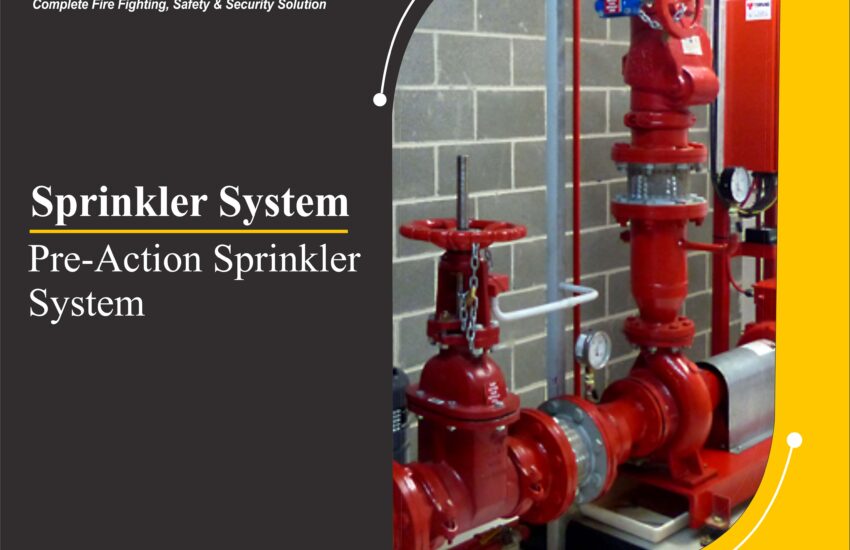
Pre-Action Sprinkler System. is a specialized fire suppression system designed to protect sensitive environments where accidental water discharge could cause significant damage. Unlike traditional wet sprinkler systems, pre-action systems keep water out of the piping until both a fire detection event and a sprinkler head activation occur.
These systems are ideal for facilities containing valuable or irreplaceable assets, such as:
- Museums and art galleries
- Libraries and archives
- Computer rooms and data centers
- Transformer rooms and cable tunnels
By combining advanced fire detection and sprinkler activation, the system minimizes the risk of water damage while providing rapid, effective fire suppression.
How a Pre-Action Sprinkler System Works
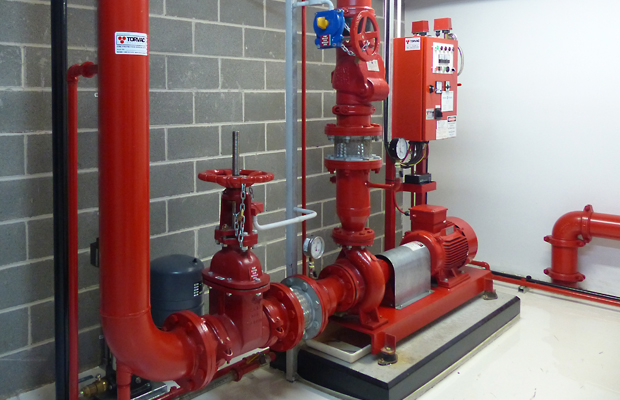
In a pre-action system, the sprinkler piping is filled with low-pressure supervisory air instead of water. Water remains behind the pre-action valve, held in check until two specific events occur:
- Detection Event: A heat or smoke detector senses a fire and sends a signal to the control panel.
- Sprinkler Activation: A sprinkler head opens when it detects heat.
Only when both conditions are met does the pre-action valve release water into the piping network, allowing water to discharge through the open sprinklers to extinguish the fire.
This two-step process prevents unwanted water discharge due to mechanical damage, false alarms, or leaks—making it ideal for areas where water exposure could be catastrophic.
Types of Pre-Action Fire Sprinkler Systems
There are two primary types of pre-action systems: single interlock and double interlock systems. Each serves specific fire protection needs depending on the level of risk and system sensitivity required.
Single Interlock Pre-Action Sprinkler System

A Single Interlock Pre-Action System operates similarly to a dry pipe sprinkler system, but it requires a preceding fire detection event before water enters the system.
How It Works:
- A heat or smoke detector activates, signaling the control panel.
- The pre-action valve opens, filling the sprinkler piping with water.
- Once a sprinkler head opens, water discharges immediately to suppress the fire.
Key Features:
- Converts from a dry system to a wet system upon detection.
- Minimizes water delivery delay compared to dry systems.
- If a sprinkler operates before detection, the system triggers a trouble alarm but does not discharge water.
Applications:
Ideal for computer rooms, control centers, archives, and museums where fast response and minimal water risk are priorities.
Double Interlock Pre-Action Sprinkler System
A Double Interlock Pre-Action System provides an even higher level of protection against accidental discharge. It requires two simultaneous events before water enters the piping:
- Fire detection (heat or smoke detector activation).
- Sprinkler operation (sprinkler head activation).
How It Works:
- Detection alone will not open the valve.
- Sprinkler activation alone will not open the valve.
- Only when both occur concurrently does the pre-action valve release water.
Key Features:
- Provides maximum protection for highly sensitive assets.
- Operates as a dry system until both detection and sprinkler activation happen.
- Requires larger design areas due to delayed water introduction.
Applications:
Best suited for data centers, electrical switch rooms, transformer enclosures, and high-value storage areas where accidental discharge must be avoided at all costs.
Main Components of a Pre-Action Fire Sprinkler System
A well-designed pre-action system includes:
- Pre-Action Valve: Controls water entry into sprinkler piping.
- Detection System: Uses smoke or heat detectors for early warning.
- Control Panel: Coordinates signals between detectors, valves, and alarms.
- Supervisory Air System: Maintains low air pressure in pipes to detect leaks.
- Sprinkler Heads: Automatically open at a preset temperature.
- Alarm and Notification System: Alerts occupants and emergency personnel.
Advantages of a Pre-Action Sprinkler System
✅ Prevents accidental discharge – Protects sensitive equipment and valuables.
✅ Fast and reliable fire suppression – Immediate response once activated.
✅ Ideal for high-value facilities – Reduces risk of water-related damage.
✅ Complies with international standards – Designed per NFPA 13 and NFPA 72.
✅ Flexible design options – Can integrate with various detection and alarm systems.
Maintenance and Testing Requirements
Regular inspection and testing are essential to ensure reliability and compliance.
Monthly:
- Inspect control valves, air pressure, and detection equipment.
- Check supervisory air pressure and system integrity.
Quarterly:
- Test fire detection devices and pre-action valve operation.
- Verify alarm functionality and electrical connections.
Annually:
- Perform a full sprinkler flow test and valve inspection.
- Flush and test water supply lines for pressure and flow.
- Check compliance with NFPA 25 maintenance standards.
Maintaining a routine sprinkler flow test helps verify that your system performs correctly in an emergency.
Applications of Pre-Action Fire Sprinkler Systems
Pre-action systems are ideal for any environment where water damage prevention is critical:
- Museums and art galleries
- Libraries and historical archives
- Computer rooms and server farms
- Transformer and switchgear rooms
- Telecommunication centers
- Medical and research facilities
By combining advanced detection with controlled water release, these systems offer the perfect balance between fire protection and asset preservation.
A Pre-Action Fire Sprinkler System offers exceptional protection for areas where both fire and water can cause devastating loss. Whether using a single interlock or double interlock configuration, this system ensures rapid response while safeguarding sensitive equipment, artifacts, and data.
